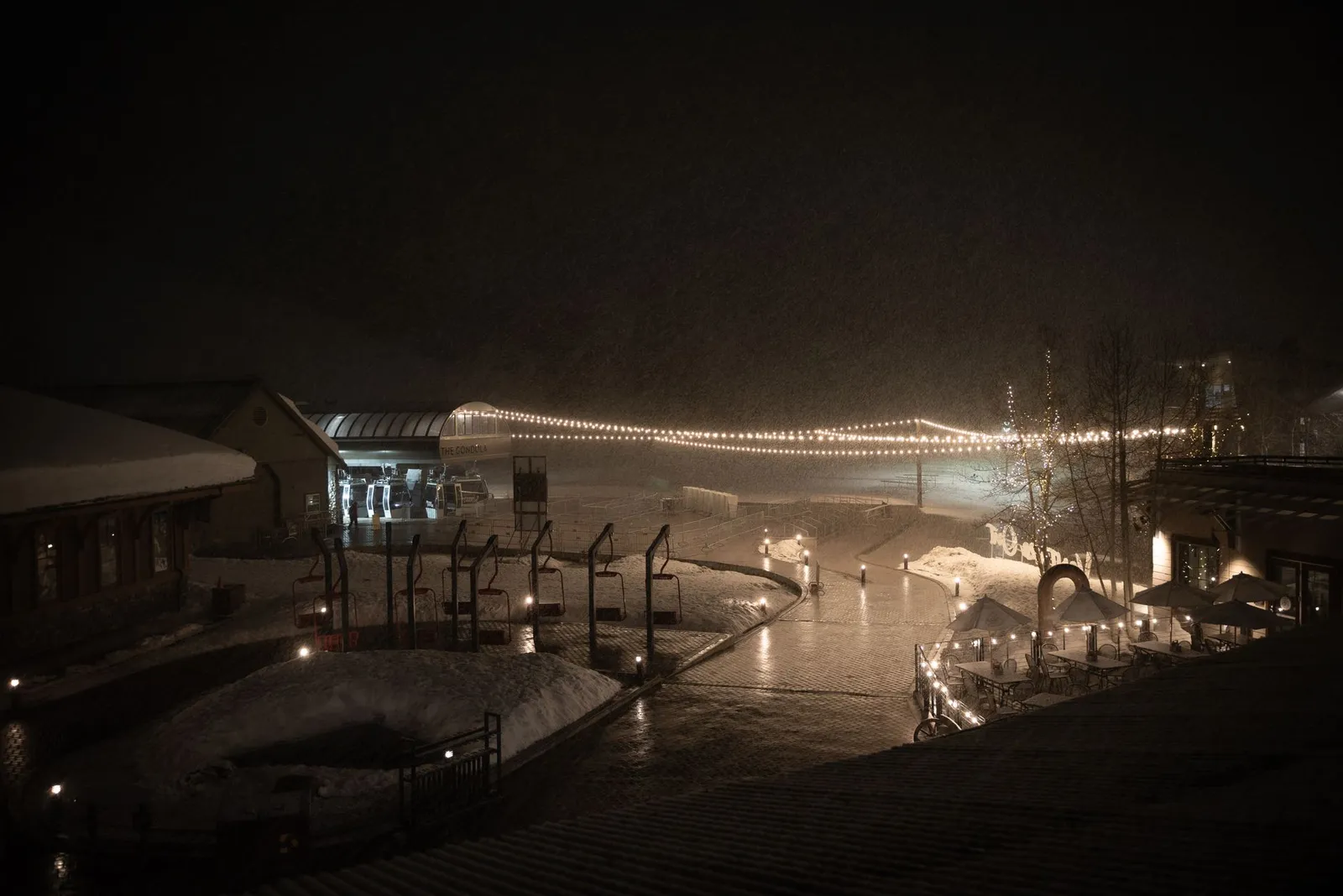
Last Tuesday, Vail Resorts issued a press release. Snowmaking upgrades at Attitash and Wildcat in New Hampshire — new low-energy snowguns, pipe replacements, repositioned guns, and a new air transducer at Wildcat that improves system efficiency during marginal temperature windows.
And somewhere, a marketing coordinator copy-pasted it into their resort CMS and hit publish. Done.
That’s not the play.
What the Technical Upgrade Actually Means
Let me translate this from operations-speak to guest-speak, because there’s a real story buried in the engineering. An air transducer upgrade means Wildcat can make snow during temperature windows it previously had to sit out. The existing system was bleeding air efficiency — not catastrophically, just enough that marginal snowmaking windows got missed or underperformed. Fix that, and you’re extending the number of viable production hours early in the season before temperatures lock in.
The low-energy snowguns at Attitash’s Saco trail mean the resort can cover key terrain at a lower operating cost per acre-foot. These guns are designed for efficiency during borderline temperatures, not just blast-it-when-it’s-cold scenarios. Combined with the pipe replacements that improve system reliability, Attitash built on an opening day last season that went top-to-bottom — and is now setting up to repeat that earlier and more consistently.
The priority for Wildcat is Lynx Trail first, then expansion from there. That’s a deliberate sequencing call, and Pat Hogan, Director of Mountain Operations, said exactly what it means: “By modernizing our system and optimizing equipment placement, we’re setting ourselves up for a more dependable start to winter and better snow quality throughout the season.”
That’s your headline, not the air transducer.
The Marketing Brief Nobody Sent
Most resorts treat snowmaking announcements as operational news. Copy the press release, add a photo of a snowgun at night, publish. Move on. That’s a missed window that costs you actual pass renewals.
Here’s what a real marketing brief for this moment looks like:
Summer timeline content. Document the installation. Post the snowgun being hoisted into position. Show the pipe work. Summer content from the hill is genuinely rare and gets outsized engagement because your audience is starved for mountain content in July. One decent iPhone video of a new snowgun being installed beats five polished graphics of a snow-covered lodge.
Translate specs to opening day language. Guests don’t know what an air transducer does. They do know what “we’re targeting an opening day two weeks earlier than last season” means. Turn every technical improvement into a specific, guest-facing outcome. If you’ve got the data from last season’s opening day and the operational baseline for this equipment, put a number on it — even directionally.
Tie it to the pass value conversation. Pass renewal decisions happen before the first snowfall of the season. Every piece of offseason content that communicates operational investment is a pre-emptive answer to the renewal question: “Will this resort be ready when I need it?” A well-timed snowmaking update in late July or August can move the needle on pass sales more than a discount code ever will.
For more on building the offseason content calendar around capital projects, take a look at how Aspen Mountain turned their old chairlift auction into storytelling fuel — it’s the same underlying principle applied to a different kind of infrastructure moment.
The Takeaway for Every Resort Marketing Team
Vail has the infrastructure and the budget to do this storytelling at scale — but the approach doesn’t require either. It requires a clear internal brief that connects the operations team to the marketing team with one question: “What did we just build, and what does it mean for the guest?”
The resorts that answer that question publicly in July are the ones whose guests feel like stakeholders by November. That’s not just dialed offseason content — that’s the whole pass renewal strategy in a nutshell.
Does your resort have a process that connects capital work to your content calendar? I’d genuinely like to know what that hand-off looks like.