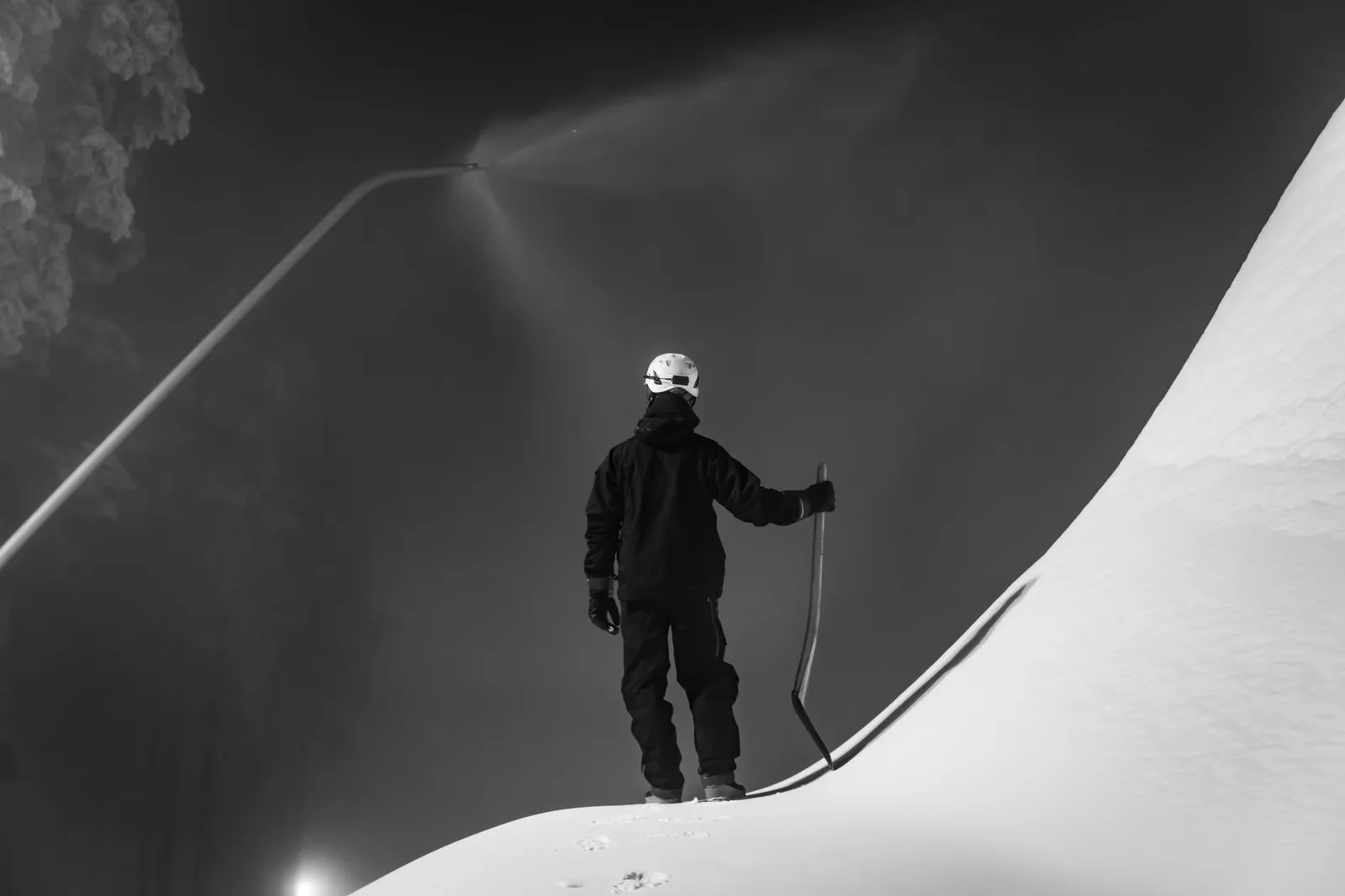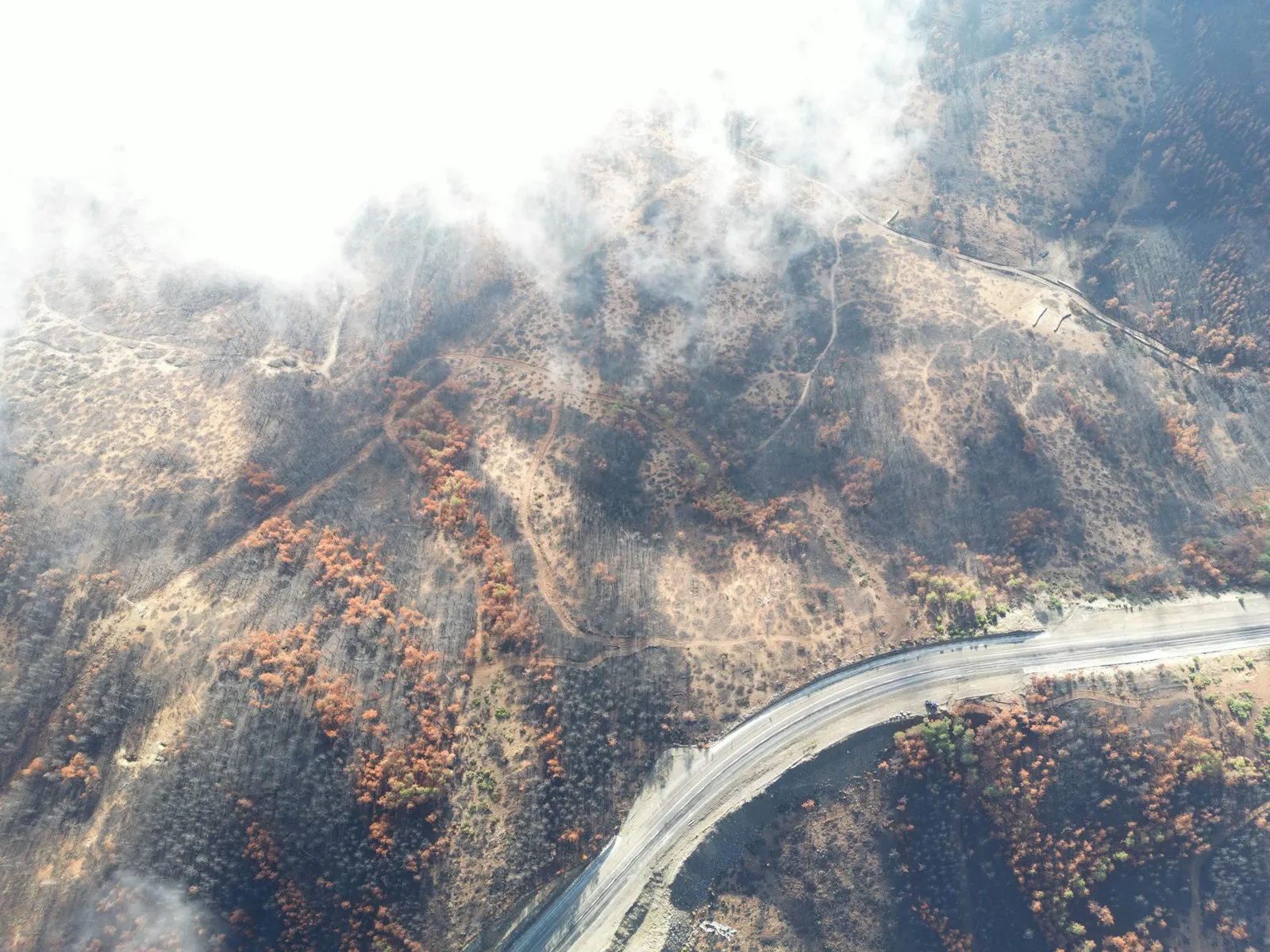
Sometime on the afternoon of July 13th, smoke started rising over Rabbit Ears Pass — southeast of Steamboat Springs, a few miles from one of Colorado’s most storied ski resorts. The Fishhook Fire. Within hours, SnowBrains was reporting something that deserves more attention than it got: Steamboat Resort had activated its snow guns as part of the fire response.
I’ve worked around snowmaking operations long enough to know that this isn’t an improvised move. It’s a deliberate protocol.
Snowmaking as a fire tool — not a new idea, but a rarely discussed one
Steamboat Resort’s own blog has documented this quietly for years. The entry is matter-of-fact about it: “snowmaking guns are charged throughout the summer as a fire management strategy.” Every on-mountain vehicle carries a 5-gallon backpack pump. All on-mountain staff receive fire training from the Steamboat Fire Department, the U.S. Forest Service, and the Routt County Wildfire Mitigation Council.
This isn’t a marketing story about one dramatic afternoon. This is what a well-run mountain ops program looks like when wildfire season arrives in July.
The infrastructure investment that makes it possible is the same one that opens the season three weeks early and extends it three weeks late: a mature, high-capacity snowmaking system with water stored, lines charged, and crews who know how to run it. The fire-defense value is a byproduct of doing snowmaking right.
Why this matters for your resort’s operations team right now
Wildfires near ski resorts are no longer rare news. Eagle Point in Utah lost roughly 300 acres to fire in June 2026 and is now in full rebuild mode. Colorado enacted a new Wildfire Resiliency Code effective July 1, 2026, requiring fire-resistant construction and documented defensible-space plans for any new permit application in fire-risk zones like Steamboat Springs.
The gap I see at most resorts: the snowmaking team and the wildfire preparedness conversation happen in completely separate rooms. Ops managers think about snowmaking as a winter tool. Fire safety is treated as a separate compliance box, usually handed to facilities and risk management.
But the mountain with a robust snowmaking infrastructure already has one of the most effective wildfire suppression assets on the property — if anyone has connected the dots between the water supply, the gun network, and what happens when smoke starts rising in July.
A few things worth reviewing with your ops team before fire season peaks:
- Is your snowmaking water supply maintained through summer? Many resorts drain or depressurize lines after closing day. Keeping pressure active through summer is a different operational posture but a meaningful one in fire-risk terrain.
- Do vehicle kits include fire suppression equipment? Backpack pumps are inexpensive and go-anywhere tools for first-response to small ignitions.
- Do your on-mountain staff have fire training? Not full firefighter certification — but basic coordination protocol with the local fire department so nobody’s improvising when smoke appears.
- Have you documented your defensible-space work? Under Colorado’s new code and similar regulations advancing in other states, documentation is required for new construction. Even outside new construction, it’s a credibility asset.
The underused capital story
Here’s the piece that’s almost entirely absent from resort marketing: snowmaking investment has a dual ROI that almost no resort communicates publicly.
Yes, it opens the mountain earlier, extends the season, and protects revenue against low-snow winters. But in a wildfire era, it also protects the physical asset. That second argument lands differently with boards, local governments, and communities who are watching smoke columns rise from the ridge.
If your resort has invested in snowmaking capacity — and summer 2026 saw capital announcements from resorts in New Hampshire, Virginia, Vermont, Connecticut, and Colorado — there’s a version of that story that speaks to wildfire resilience that almost nobody is telling.
The mountain that framed its snowmaking expansion as both a season-length play and a wildfire-resilience investment would be the first one I’ve seen do it. It’s a real story. The infrastructure to tell it is already there.
Are your operations and marketing teams connected on this one? I’m genuinely curious how many resorts have formalized the snowmaking-as-fire-defense protocol versus how many are improvising when it matters.